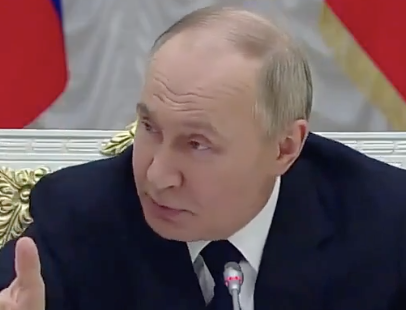
Russian President Vladimir Putin’s recent claim that the 2014 Ukraine crisis was a Western-orchestrated coup has reignited controversy. Allegedly stating, “They staged a coup… they forced us to do what we’re now doing,” Putin seems to address the West, particularly the U.S., opening a narrative window for former President Donald Trump.
Putin says that Western elites staged a "coup" in Ukraine…
— American AF 🇺🇸 (@iAnonPatriot) May 26, 2025
He’s is EXACTLY right.. pic.twitter.com/cqd09ZEnQT
By letting Putin speak first, Trump can now amplify this claim without being dismissed as a “Putin puppet,” potentially exposing a web of corruption tied to the 2014 events.
BQQM: The 5GW Hammer is Falling…
— Observing Consciousness (@holonabove) May 27, 2025
Putin just said the quiet part out loud…
“They staged a coup… they forced us to do what we're now doing.”
He’s not talking to Russia, he’s talking to us, and Trump needed him to say it first…
Because if Trump had been the one to drop… https://t.co/cOLcUJ3yRj pic.twitter.com/ZbxAlp7BHj
Evidence suggests U.S. involvement in Ukraine’s upheaval. Assistant Secretary of State Victoria Nuland admitted to $5 billion in U.S. funding for Ukrainian “civil society,” a term often linked to NGOs and protests. A leaked 2014 call revealed Nuland and Ambassador Geoffrey Pyatt discussing Arseniy Yatsenyuk as a preferred leader before President Yanukovych’s ouster, with Yatsenyuk later becoming Prime Minister. Senator John McCain’s 2013 Kyiv appearance alongside far-right Svoboda party leaders lent public support to the protests. Post-coup, groups like the Azov Battalion, with ultranationalist ties, gained Western backing, raising questions about U.S. priorities.
Trump’s 2019 call with President Zelensky, probing these events, led to his impeachment, suggesting he was close to unraveling a larger scheme. Now, Putin’s statement allows Trump to confirm, not introduce, the coup narrative, potentially using evidence like Nuland’s audio or Hunter Biden’s Burisma ties to expose media and intelligence overreach.
Counterpoints: Many Ukrainians view Euromaidan as a genuine revolt against Yanukovych’s corrupt, pro-Russian regime, with 2014 polls showing strong public support. While U.S. influence is documented, direct evidence of a CIA-run coup is lacking, and Putin’s framing serves Russia’s agenda to justify its actions in Crimea. The “Swamp” conspiracy oversimplifies complex events, blending local agency with geopolitical gamesmanship.
This is narrative warfare: Putin drops a spark, and Trump could fan the flames, reshaping how Americans view Ukraine and beyond.